Disentangling Where and When
A post-hoc framework for video action recognition that separates spatial appearance evidence from temporal motion evidence, using a dedicated motion perturbation based on nearest-frame replacement.
Researching interpretable machine learning for complex scenes, where computer vision, human understanding, and interactive AI meet.
Selected work
A selection of projects spanning video explanations, relational learning, global and local explanations, natural-language interfaces, content-based retrieval, planetary AI, medical imaging, aerial imagery, and visual reasoning.
A post-hoc framework for video action recognition that separates spatial appearance evidence from temporal motion evidence, using a dedicated motion perturbation based on nearest-frame replacement.
A neurosymbolic approach that uses functional gradients to guide an LLM toward useful first-order rules, replacing combinatorial symbolic search while retaining interpretable probabilistic logic programs.
An LLM-mediated interface that turns natural-language questions into structured queries over explanation data, making global explanations easier to explore interactively.
Human-recognizable primitive concepts are composed into logical formulas that explain individual predictions, classes, and multiclass model behavior.
IJCLR 2025 ↗A model-agnostic framework for explaining image classifiers globally with human-aligned concepts rather than only per-image attribution maps.
Paper ↗Prototype-based, interpretable content search for NASA's Planetary Data System, designed to help users inspect and validate evidence behind Mars image classifications.
Paper ↗Explainable retrieval for chest X-rays and skin-lesion imagery, using saliency to reveal which visual evidence drives similarity between medical images.
Paper ↗Explaining complex-scene classifiers with compact sets of relevant objects, using search and dimensionality reduction to summarize model behavior locally and globally.
AAAI ↗A utility-based approach to measuring whether explanations actually help people perform a retrieval task, with similarity saliency integrated into an interactive search loop.
Paper ↗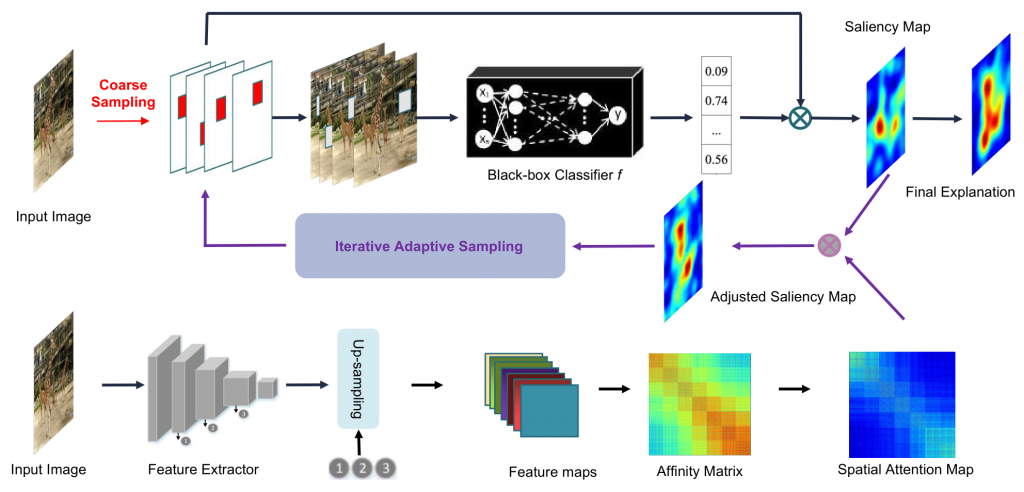
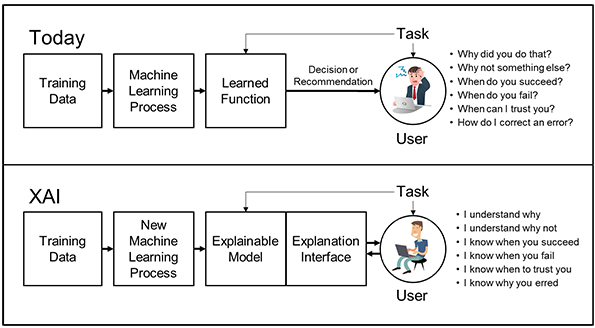
Research toward systems that communicate why they made a decision—not only what they predicted.
Program ↗
Investigating how model interpretations behave under perturbations in satellite and aerial imagery.
Thesis ↗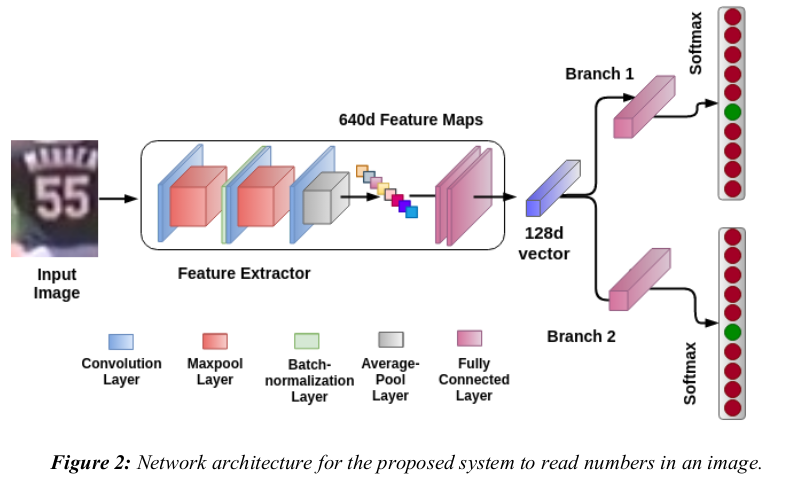
A dual-head joint-learning architecture for reading two-digit jersey numbers from imagery.
Code ↗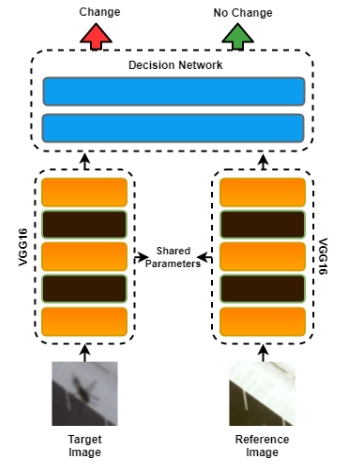
Siamese-style neural architectures for finding meaningful change across paired satellite images.
Code ↗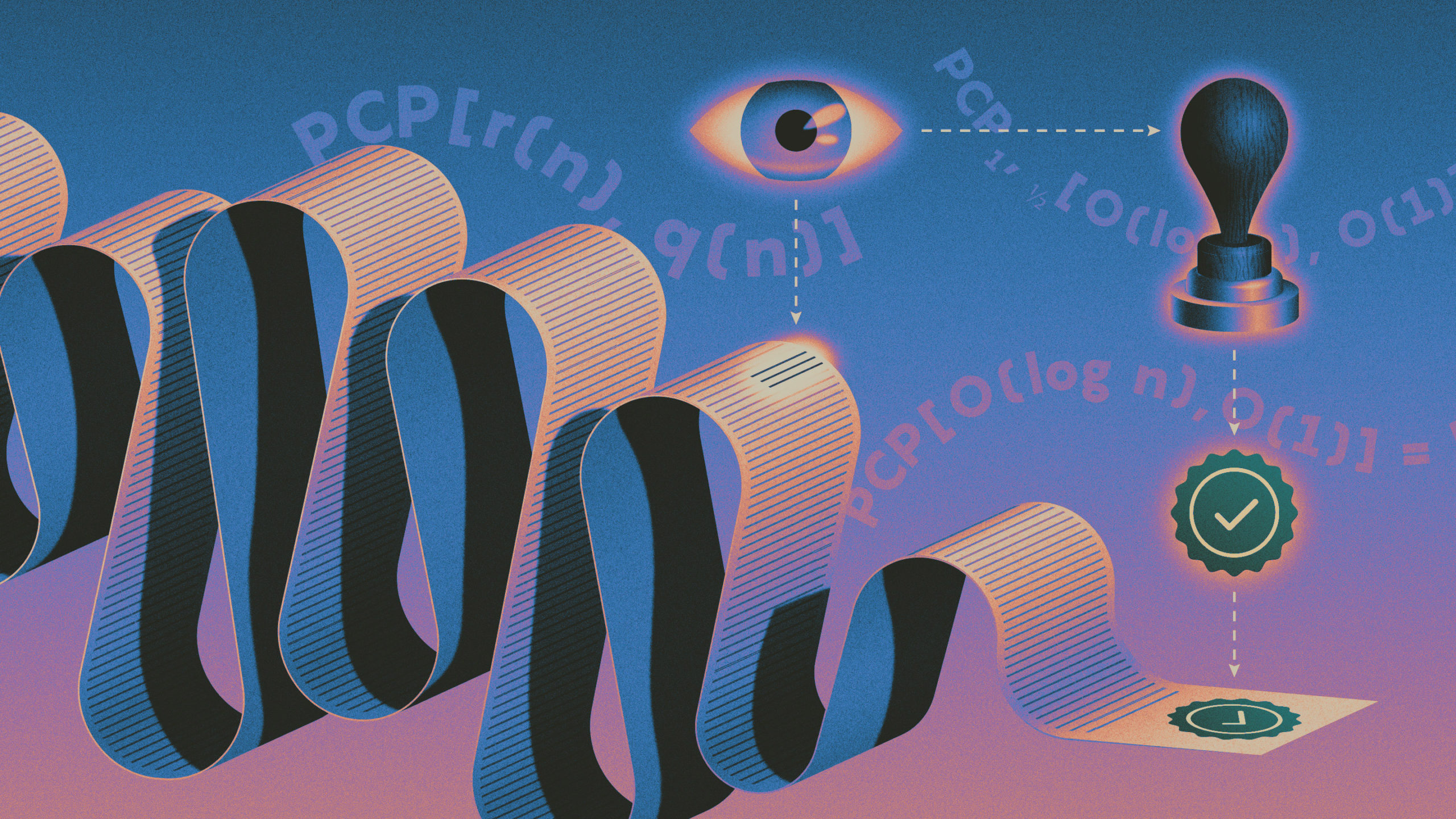
An accessible exploration of PCPs, their surprising power, and the weak PCP theorem.
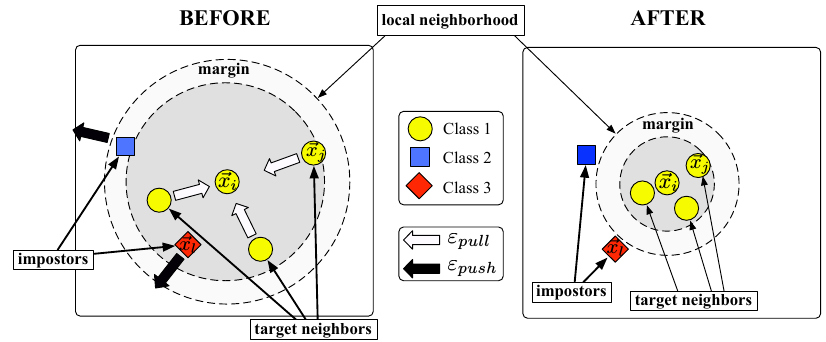
Exploring Rademacher complexity and matrix norms to characterize generalization in metric and similarity learning.
Publications
Peer-reviewed papers and conference work, alongside the latest Scholar-listed preprints in interpretable vision, video understanding, relational learning, retrieval, explainability, and remote sensing.
NeurIPS 2026 · Bhavan Vasu, Giuseppe Raffa, Prasad Tadepalli
IJCLR 2026 · Saurabh Mathur, Sahil Sidheekh, Bhavan Vasu, Farbod Tavakkoli, Prasad Tadepalli, Kristian Kersting, Sriraam Natarajan
Preprint · Bhavan Vasu, Rajesh Mangannavar
IJCLR 2025 · Bhavan Vasu, Giuseppe Raffa, Prasad Tadepalli
Electronics · Bhavan Vasu, Kunal Rathore, Prasad Tadepalli
IAAI 2024 · Bhavan Vasu, Steven Lu, Emily Dunkel, Kiri L. Wagstaff, Kevin Grimes, Michael McAuley
AAAI Student Abstract Program · Bhavan Vasu, Prasad Tadepalli
American Geophysical Union · Steven Lu, Kiri Wagstaff, Emily Dunkel, Bhavan Vasu, Kevin Grimes, Michael McAuley
WACV · Brian Hu, Bhavan Vasu, Anthony Hoogs
Applied AI Letters · Brian Hu, Paul Tunison, Bhavan Vasu, Nitesh Menon, Roddy Collins, Anthony Hoogs
Applied AI Letters · Bhavan Vasu, Brian Hu, Bo Dong, Roddy Collins, Anthony Hoogs
IEEE Access · Bhavan Vasu, Andreas Savakis
WACV · Bhavan Vasu, Chengjiang Long
Journey
From electronics and imaging science to applied computer vision, explainability, and planetary data.

Education

Education + Research

Industry research

Planetary AI

Doctoral research
About
My work uses computer vision and machine learning to find patterns, inspect model behavior, and turn opaque predictions into understandable interactions. I enjoy entering unfamiliar research spaces and building on existing ideas with practical, creative improvements.
Beyond research, I care about access to education and minority empowerment. Photography and music shape how I observe, frame, and communicate technical ideas.
“Be bold enough to follow the obvious, but have the tenacity to go after the behemoth.”
Personal maximField notes
A selected stream of talks, awards, papers, and community work.
Recognized at Oregon State University for work on global explanations.
Presented interactive Mars image search research in Vancouver.
Interactive Mars Image Content-Based Search with Interpretable Machine Learning.
Appointed to support the conference’s research community and operations.
Rule-Based Explanations for Deep Networks recognized at the PPI Center meeting.
Selected for the Graduate Fellowship Program supporting the Mars 2020 mission.
Collaborator perspective
“He combines a deep knowledge of machine learning techniques and research with an unparalleled willingness to branch out and try new things.”
“Bhavan knows the foundations clearly enough to understand subtle mistakes and is capable enough to appreciate subtle but breakthrough ideas.”
“It’s rare to come across individuals who excel in different domains, and Bhavan is indeed a rare find.”
Contact
For research collaborations, speaking, reviewing, or thoughtful conversations about visual intelligence.